Review draft · Brené Brown voice · SmartStrongAlive
Anhedonia: The Word for the Flatness Nobody Warned You About in Menopause
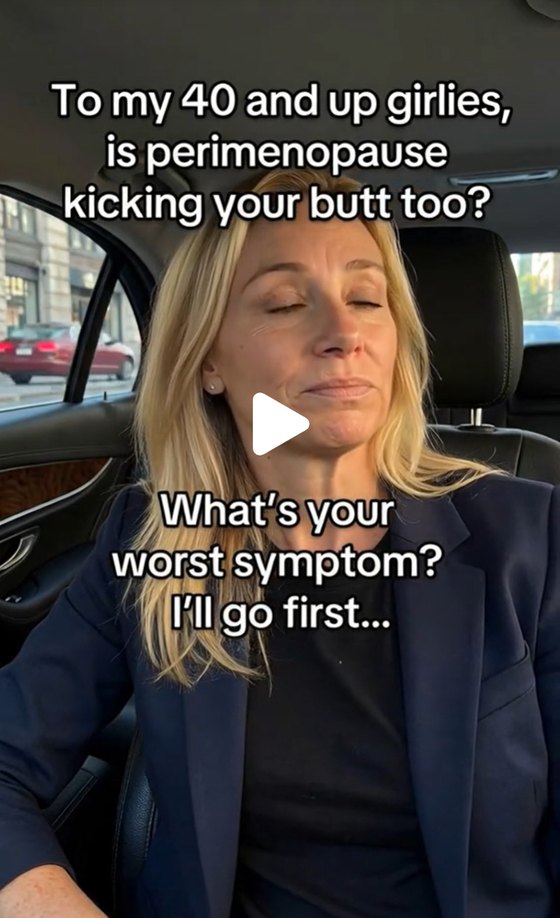 The video this came from. Lila asks her 40-and-up followers for their worst symptom, and 49 of the 82 women describing this flatness turned up in her comments.
Watch on TikTok →
The video this came from. Lila asks her 40-and-up followers for their worst symptom, and 49 of the 82 women describing this flatness turned up in her comments.
Watch on TikTok → Are you a woman over 40 who walks into a room and forgets why she’s there, whose mood, if she’s honest about it, is best described as meh? Or blah?
If you just recognized yourself in that, stay with me. I’ve been exactly where you are, in that same flatness, and I was lost in it for years before I found my way back out. I’m not here to fix you, and I’m not here to tell you what you’re doing wrong. I’m here to give you the thing I wish someone had given me when I was still in the dark.
That first part, the forgetting why you walked into the room, you already have a word for. It’s brain fog, and everybody is talking about it.
It’s the other half of the question I want to sit with. The meh. The blah. The flatness that has quietly settled over everything. Because nobody handed you a word for that one, and when we don’t have a word for a thing, we make one up. Usually it’s a story about ourselves, and usually it’s unkind.
So let me name what it actually feels like, because I think you’ll recognize it. It doesn’t arrive as sadness. Sadness you’d have known. This one arrives as nothing.
The weekend you used to look forward to. The trip that’s now just a list of logistics. The song that used to give you chills and now simply plays. The people you love are right there in the next room, and you’re somehow a little bit gone from all of it.
And you’re still doing every bit of it. The dinners, the texts back, the showing up. But something underneath the doing went quiet, and you couldn’t tell me when it started.
And then there’s the sentence you haven’t said out loud to anyone. The one that scares you. And I want you to notice that it isn’t a fact. It’s a story.
The story I’m telling myself is that this is just who I am now.
Hear me. That’s a story, not a diagnosis. And we’re going to take it apart together, right here.
A woman typed this underneath a video about menopause, most likely late at night when she couldn’t sleep. Read it slowly.
The absolute lack of enjoyment. Nothing excites me anymore. That "meh" feeling. Not really depressed but everything feels flat. Except for the random rage now and then.
Three thousand, eight hundred and ninety women pressed the little heart on that.
I want you to sit with what that number is, because it isn’t a like count. It’s nearly four thousand women reading one stranger and thinking the same two words. Me too.
That’s the whole thing, actually. Me too is the exact opposite of shame. Shame says you’re the only one. Me too says you aren’t. And here are four thousand women saying it at once.
You aren’t the only one. You aren’t imagining this. And you aren’t making it up.
But look at how hard she had to work to say it. She reached for "meh." She reached for "flat." She threw out the word depression, the only word she had been given, because she could feel it was the wrong one. Then she built the rest out of everything it isn’t.
She was describing something that has a name. A real one, with decades of research behind it.
Nobody ever gave it to her.
I read 6,988 of these comments across three videos. Eighty-two women were describing this same thing.
Not one of them had the word.
The word is anhedonia
Say it out loud. Anhedonia. It means the loss of your interest, your anticipation, your drive, your pleasure.
And here’s why I’m so set on you having the word, because this is the part I’ve come to believe matters most. The moment a thing has a name, it stops being a verdict on who you are and becomes a thing that’s happening to you. And a thing that’s happening can be looked at, and talked about, and sometimes changed.
Everything I’ve read about shame says the same thing: it needs three conditions to survive, secrecy, silence, and judgment. This flatness has had all three. You’ve kept it secret because you couldn’t explain it. You’ve stayed silent because you didn’t have the word. And you’ve judged yourself hard for it, called yourself lazy, ungrateful, broken. That judgment is a second wound laid right on top of the first, and it’s the one I most want to lift off of you. A body running low on something it needs isn’t a character running low on worth.
So let me be really clear. This isn’t laziness. This isn’t you being ungrateful for a good life. This isn’t you becoming a lesser version of yourself.
Now here’s the part that got me. The clinical word exists. The everyday word exists too. And the everyday word is "meh."
Have you been feeling kind of meh or bleh lately? That could be a sign of anhedonia.
Judith Joseph, MD · Columbia-trained psychiatrist
That "meh" feeling.
A stranger · 3,890 likes
I don't want to feel meh.
A stranger · 1 like · effectively invisible
A Columbia-trained psychiatrist and two women who have never met reached for the very same syllable, with nobody coordinating a thing.
The word already exists. What’s broken is the road between the doctor’s office and the comment section.
I’ll go first
That’s the deal I try to keep, that I don’t ask you to be honest about something I won’t be honest about first. So here’s mine.
I’ve been on an antidepressant for thirty years. I’m not going to whisper that. It does its job.
But something else slipped in during my forties. Quieter. Easier to explain away. It wasn’t sadness. I was up, dressed, getting it all done. Something underneath the getting-it-done had gone flat.
I used to wake up with ideas I couldn’t wait to chase. That turned into waking up with ideas I noted, filed, and never once went after.
And here’s the story I told myself about it. I decided I was just getting more realistic. I decided this was what wisdom is supposed to feel like at fifty-two. I decided the fire I had at twenty-five, when I built adoption.com and was helping run orphanages in three countries with energy to spare, was simply a thing you hand back to your youth. And I grieved her, that woman I used to be, quietly, and I moved on.
I grieved her quietly and I moved on.
That sentence is the whole trouble, and I didn’t write it about myself alone. Eighty-two strangers told themselves a version of the same story. One of them, buried four thousand comments deep where nobody scrolls, said it better than I could:
the worst is that you dont know how to explain it to people you care about because you dont understand it yourself
Buried past position 750 · seen by nobody
She’s standing exactly where I stood. And the difference between us was never that I was smarter, or that I tried harder. Somebody finally put a word in my hand. That’s the whole of it.
This isn’t depression, and that difference is everything
Four women who have never met dug in on the very same distinction. Their comments sit at 3,890 likes and at zero, and every one of them insisted on the same thing.
Not really depressed but everything feels flat.
3,890 likes
the feeling of nothing I'm not sad I'm not happy I just feel nothing
10 likes
I'm not depressed and I don't feel the excitement and happiness that I once used to have
1 like
it is like a depression but not hard to explain
0 likes
Every one of them ruled out depression before she would describe what she actually had. Nobody trained them to do that. They did it because the word they were handed didn’t fit, and they could feel the not-fitting in their own bodies.
Depression is the presence of pain. This is the absence of pull.
So let me be clear, and let it be a relief and not a fright. If you’re crying, you’re feeling something, and that isn’t this. This is the other thing, the one where you look up one ordinary afternoon and realize you haven’t felt much of anything in a long while, and you can’t say when it began.
Come find yourself in here
I’m not doing this to diagnose you. I couldn’t, and neither could any quiz on the internet. I’m doing it so you can put down the lazy story and pick up the true one.
Out of 323 comments that used the right kind of language, I kept 82. I sorted them by what the woman was actually describing, not by the tired label everyone flattens it into.
Flatness. Nothing registers. 26 of 82
The emptiness. Like my soul has drifted to a place there's no joy or light.
887
I just feel completely numb and detached from myself and everyone!
23
Can't feel pleasure. The thing still happens. The joy doesn't. 22 of 82
Things I once enjoyed, I don't enjoy anymore.
7
No enjoyment whatsoever. Nothing feels real anymore.
11
Can't want anything. Not tired. No drive to begin. 22 of 82
The lack of motivation for anything, I can barely be bothered finishing this sentence
5
where did my energy go, where did my passion go, where did my interest in anything go, where did my drive go. I dont recognize me anymore
buried, 0
Withdrawal. People stopped being worth it. 10 of 82
Feeling alone all of the time, but wanting to be alone?!
6
You may see yourself in more than one of these. Most of us do. It doesn’t mean you’re further gone. It means this thing has more than one dial.
I have to stay in my own lane here
The one I carry is that third one. That absence of pull, that not being able to make myself begin. It’s my version, and it’s the only one I can speak to from the inside.
And it isn’t the most common one. Flatness and lost pleasure together are 48 of the 82. Most of the women in this gathering carry a version I don’t.
I’m telling you that on purpose, because the easy thing, the thing that would sell better, is to make my story your story. I care about you too much to do that. If nothing lands for you even when you’re right in the middle of it, that’s a different problem, and my answer may not be your answer.
But here’s the thing I most wanted to get you to.
This has a mechanism. And if it has a mechanism, then it isn’t a flaw in who you are. It’s something happening in you. Let that land all the way down, because it’s the whole point.
Wanting and liking are two different systems, and they can come apart. That’s how you can still enjoy the dinner once you’re finally at the table, and be completely unable to make yourself get up and go.
It also means the levers are different. Antidepressants work on the serotonin system, and they do it well. Mine does its job. But serotonin and dopamine are next-door neighbors, not the same house, and you can have one of them tended beautifully and the other one nobody has ever looked at.
Two women in this gathering said it out loud without knowing what they were saying:
Zero motivation, never get excited or happy about anything anymore. This sucks, even on HRT.
17 likes
I'm thankful for estrogen and Lexapro. no energy, no motivation…
buried, 0 likes
Serotonin lever, pulled. Estrogen lever, pulled. Still flat. Both of them are describing a gap that nothing in their treatment is touching. And one of them is completely invisible.
This next part is the arena
Walking into a doctor’s office and saying the true, unglamorous sentence out loud is a genuinely brave thing. It’s vulnerable, and vulnerability isn’t weakness here. It’s the most honest kind of courage you have. So let me hand you exactly what to say.
Say the specific sentence. Not "I feel depressed," which sends you down a road you may have already walked. Say this: "I no longer look forward to things I used to look forward to." That’s the sentence that’s hard to mishear.
Don’t lead with "libido." It will hijack the whole appointment and carry it somewhere else.
Bring a timeline, not a symptom list. When did it start? What changed around then? Your timeline tells a good doctor more than any single number will.
Rule out the ordinary things first, because they’re common and they’re fixable. Thyroid. Ferritin. B12. Sleep apnea. A medication review, because emotional flatness is a known side effect of some antidepressants, and that’s a conversation with your prescriber, not a failing to carry alone.
And here’s the one thing I can hand you with a credential instead of a story.
My degree is in medical technology. I’ve drawn the blood myself and run the tests myself.
Most labs measure testosterone with an immunoassay, and those machines were built for men’s levels. The Endocrine Society says outright that below 150 ng/dL, they’re "neither analytically nor clinically useful." Women live our whole lives below that line.
So if you get tested, ask for the method by name:
- Total testosterone by mass spec
- Free testosterone by equilibrium dialysis
- SHBG
All three together. One without the others does not answer the question.
A "normal" result off the wrong machine isn’t an answer. It’s noise with a reference range printed next to it.
And now the part I’ll stay honest about even though it costs me the clean ending.
I take testosterone. My flatness lifted. My antidepressant hadn’t changed and I hadn’t changed anything else.
But the randomized trials don’t back that up, and I’d rather tell you the truth than sell you the tidy version. No trial has ever used a real measure of anhedonia as its main outcome in women. That doesn’t make the mechanism wrong. It means the study hasn’t been done, and anyone promising you certainty here’s selling you something.
You aren’t chasing a verdict. You’re chasing a better question. Go and get it.
If you’re in the dark part of this
Anhedonia keeps company with thoughts of not wanting to be here, even in women who would never once call themselves sad. The absence of visible sadness doesn’t make it safe.
Women in the comments I read wrote that they didn’t want to be here anymore. And they’re exactly the ones most likely to find a page like this one, about not being able to feel a thing.
If you’re having thoughts of harming yourself, call or text 988 in the United States. It’s free, it’s day or night, and there are real people on the other end who’ll take you seriously.
I didn’t put that here to cover myself. I put it here because you’re reading, and you’re worth every word of it.
I’m a medical technologist, not a doctor, and none of this is medical advice. Take it to a clinician who’ll sit down and look at it with you. And if they won’t, that’s information too.
Send this to someone who was told her labs were normal.
If this was useful, SmartStrongAlive comes out weekly.
smartstrongalive.substack.com
Sources
- Rosner W, et al. Position statement: utility, limitations, and pitfalls in measuring testosterone. J Clin Endocrinol Metab. 2007;92(2):405-413. PMID 17090633.
- Davis SR, et al. Global Consensus Position Statement on the Use of Testosterone Therapy for Women. J Clin Endocrinol Metab. 2019;104(10):4660-4666. PMID 31498871.
- Islam RM, et al. Safety and efficacy of testosterone for women: a systematic review and meta-analysis. Lancet Diabetes Endocrinol. 2019;7(10):754-766. PMID 31353194.
Comment corpus: 6,988 comments across three menopause videos, July 2026. 323 keyword candidates, each read and judged by hand, 82 kept. Quoted verbatim, usernames omitted. The 82 is a floor, not a census. Method and the 241 rejects: menopause-anhedonia-language