"It's Just Aging" Was Never a Good Enough Answer
The first issue of SmartStrongAlive, and what I'm trying to build here.
Here's a visit a lot of women will recognize.
You go in because you're tired in a way that sleep doesn't fix, your memory has gotten slippery, you've put on weight around the middle that won't budge no matter what used to work, and your mood has gone flat. They run a panel. A week later someone tells you the labs are normal. Maybe they offer an antidepressant. Maybe they say it's stress, or perimenopause, or just your age, and that's the end of the appointment. You leave with a prescription or a shrug, and no real explanation for why your body stopped feeling like yours.
I've had versions of that visit. So has nearly every woman I know past 45.
What "aging" leaves out
"Aging" tells you roughly when something is happening. It doesn't tell you what, or why.
A more useful answer names the mechanism. Estradiol falling, and what that does to sleep, mood, bone, and the brain. Insulin resistance creeping up years before it shows on a standard panel. Muscle quietly disappearing after 40, on the order of 3 to 8% a decade, unless you work to keep it. Testosterone declining and taking a chunk of motivation with it. Each of those is measurable. Most are modifiable. None of them are captured by the word "aging."
And to be fair to the clinician, this usually isn't carelessness. The panel really did come back unremarkable, fifteen minutes isn't enough to chase a dozen overlapping systems, and medicine has been burned before by running ahead of its evidence. The trouble is that "normal labs" and "nothing is wrong" are not the same sentence, and the appointment tends to end as if they were. I understand the constraint. I just don't think it should be the last word, and it doesn't have to be.
"Aging" tells you when something is happening. It never tells you what, or why.
Who's writing this
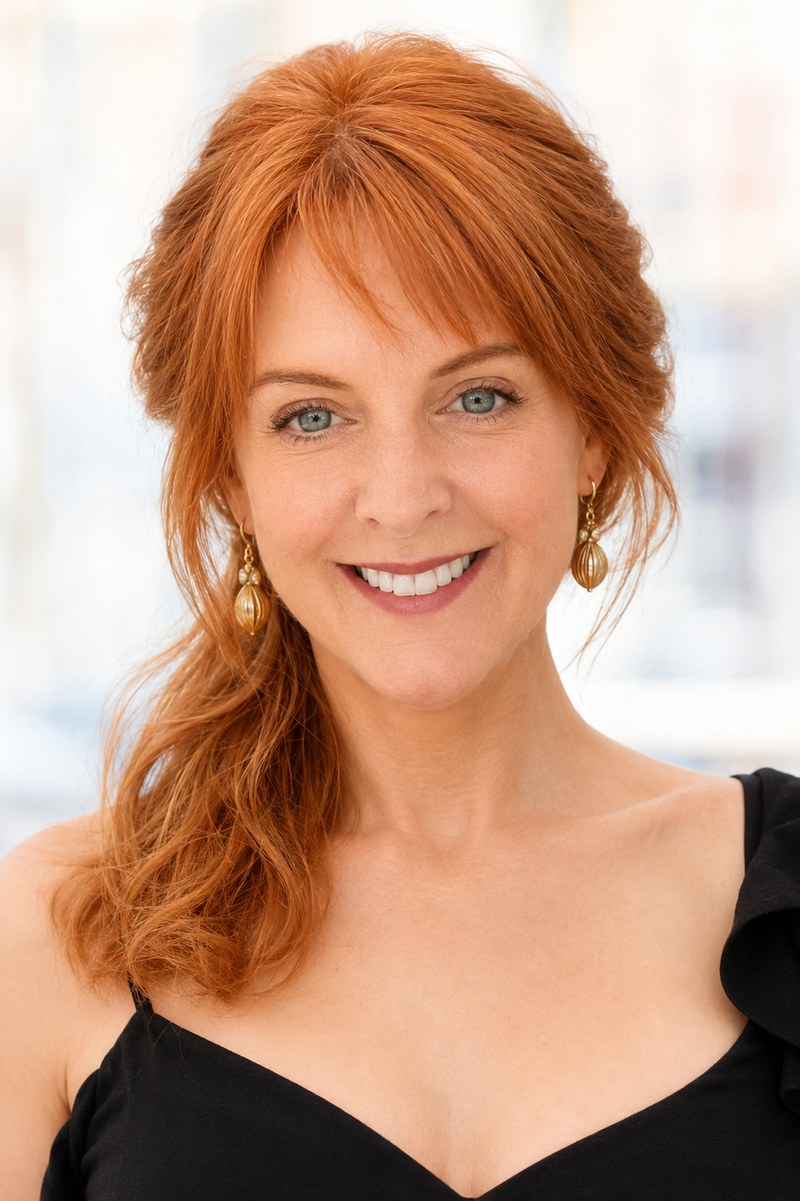
Annette Thompson, founder of SmartStrongAlive
I'm Annette. I'm 57. I'm not a doctor, and I won't write like one or borrow a white coat that isn't mine.
What I have is a science background, a stubborn streak, and about thirty years of reading primary research because I have trouble leaving a question alone once it gets hold of me. I started adoption.com in 1995 and taught myself to build it. I ran orphanages in Ethiopia, Kenya, and Haiti. I adopted seven children. I've spent most of my life pulling complicated problems apart to see how they actually work, and the state of women's health information is one of the messier ones I've come across.
So I read the studies myself. I look at how they were designed, who was actually in them, what they measured, and how large the effect really was. Then I write up what I find in plain language. None of this is a substitute for your own doctor. The point is to walk into that office better informed, with sharper questions and a sense of what the evidence does and doesn't support.
Why I want to get this right
I have a particular reason to care about the brain-health research. I carry two copies of the APOE4 gene, the E4/E4 pairing that comes with the highest genetic risk for Alzheimer's. My mother has the disease now. When I read the work on estrogen, metabolic health, and cognition, I'm reading it as someone who has a real stake in whether any of it holds up.
What this publication covers
SmartStrongAlive is a women's health and longevity publication. Menopause is usually the first door women walk through, but the scope is wider:
- Hormones, including the HRT and testosterone research most of us were never told existed
- Brain health and dementia risk, especially when it runs in the family
- Metabolic health: blood sugar, insulin, and how much of the rest sits on top of it
- Strength and muscle, and the exercise research that was mostly done on men
- Lab work: which numbers are worth asking for, and what they actually mean
- Genetics, and what your DNA does and doesn't decide
A lot of this got buried for a long time. In 2002, the Women's Health Initiative stopped its estrogen-plus-progestin arm early, about 16,000 women, the coverage was alarming, and a generation of doctors backed away from prescribing hormones at all. The trial was real. What it actually showed was narrower than how it was reported: the women were on average more than a decade past menopause, on one specific oral formulation. We're still sorting out the fallout twenty years later. That sorting-out is a good deal of what I'll write about.
How I'll handle the evidence
Every claim I make will point to a source you can check: PubMed, peer-reviewed journals, the paper itself. When the evidence is strong, I'll say so. When it's thin, mixed, or based on a study that doesn't really apply to you, I'll say that too, instead of rounding a maybe up to a yes. I would rather tell you something is uncertain than hand you false confidence.
I'm also not building this to sell you supplements, and I won't talk down to you. You can handle a real explanation, including the parts that don't resolve cleanly.
What to expect, and where to start
I publish once or twice a week. Some pieces are deep dives with full citations. Others are short and practical: one lab value, or one question worth raising at your next appointment.
A few that are coming soon: why an antidepressant couldn't touch a particular kind of flatness, and what finally did; the hormone almost no woman gets offered; and what the 2002 hormone study actually said, set next to what everyone heard.
If that's the kind of thing you've been looking for, you can subscribe below. It's free. And if a specific question is what brought you here, reply and tell me what it is. I read everything, and it shapes what I write next.
Subscribe to SmartStrongAliveAnnette
SmartStrongAlive | Because "it's just aging" was never a good enough answer.