Mont Blanc Summit Summer 2027
Private deliverable. Enter the hub password to continue.
That's not right. Try again.
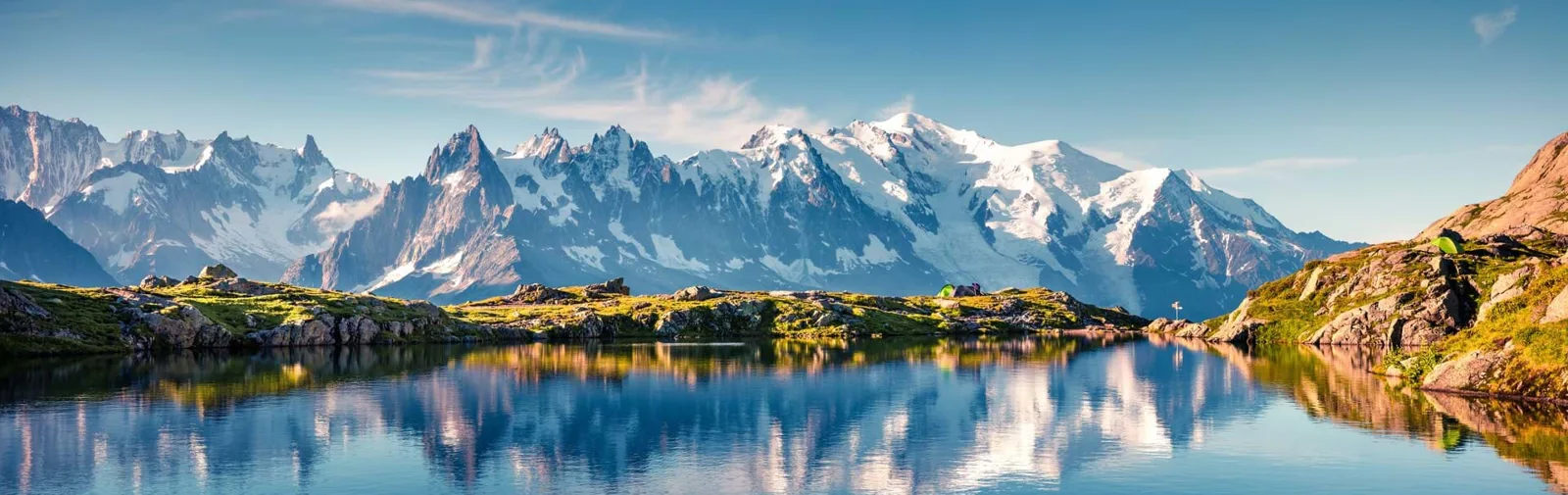
Mont Blanc Summit
Summer 2027
Written for Bob, 31 July 2026. Every price and figure below carries the date it was checked and a link. Prices are 2026 rates being used to plan a 2027 climb, so recheck in January 2027.
Assumptions I'm working from: you've got real glaciated-peak experience (Rainier, Baker, or equivalent), you're comfortable on crampons and rope, and you're going as a solo client rather than with a group. Tell me if any of that is off, because it changes the recommendation.
The short version
The climbing isn't the hard part. Getting a bed is.
Mont Blanc's normal route is graded PD+. For someone who's done Rainier, the movement will not be what stops you. What stops people is a bunk in the Refuge du Goûter, which holds 120 people, sells out within hours of the booking portal opening, and which you cannot legally skip.
So the whole plan bends around one date: the FFCAM booking portal opens in early April 2027. Everything else is downstream of that.
What I'd do: book a guide company that holds block hut reservations, commit by January 2027, target late June or the first ten days of September, and climb the Goûter route. Budget $5,500 to $7,500 all in from Denver.
The honest bar, and you clear it
Worth stating plainly since so many people on this mountain don't clear it.
Mont Blanc kills roughly 100 people a year across the massif out of about 30,000 attempts, with about ten a year on the French normal route alone since 2018 (Global Summit Guide, The Local). That makes it the deadliest peak in Europe in absolute terms. The reason isn't that it's technically hard. It's that a cable car and a rack railway put 4,800 metres within reach of people who've never worn crampons, which produces a persistent mismatch between ambition and preparation.
You're not that person. But two things about Mont Blanc are genuinely harder than Rainier and worth respecting:
- It's a thousand metres higher. 4,808 m versus 4,392 m. Above 4,000 m your ceiling drops fast, and summit day is long.
- The objective hazard is rockfall, not crevasse. On Rainier the danger is mostly under your feet. Here the main danger on the standard route comes from above, in a gully you cross twice, and no amount of skill removes it. You manage it with timing, not technique.
Summit success rates, from PGHM-registered attempts 2010 to 2025 (Global Summit Guide):
| Success rate | |
|---|---|
| All attempts | 58% |
| IFMGA-guided | 70% |
| Independent | 44% |
| Goûter route | 64% |
| Trois Monts traverse | 38% |
That guided-versus-independent gap is the single most useful number in this report, and it's not mostly about skill. Guides get better weather intelligence, hold hut bookings on better dates, and turn people around at the right time.
Route choice: take the Goûter
Two realistic options, and they trade off in an interesting way.
Goûter route (the normal route)
The standard. Tramway du Mont-Blanc to Nid d'Aigle, up to the Tête Rousse hut, across the Grand Couloir, up the Goûter arête to the Refuge du Goûter at 3,835 m, then the Dôme du Goûter and Bosses ridge to the summit.
- 64% success rate, the best of any route
- Graded PD+, straightforward for your background
- The Grand Couloir is the crux and it isn't a climbing problem. It's a rockfall chute, nicknamed the Corridor of Death, and you cross it twice. There's a fixed cable. You move fast, early, and one at a time.
- The approach to the hut is a real 5-hour day with 1,500 m of gain
Trois Monts (via the Cosmiques hut)
Aiguille du Midi cable car, then over Mont Blanc du Tacul and Mont Maudit to the summit.
- 38% success rate, which is the whole argument against it
- Much better logistics. The Cosmiques hut is a ten-minute walk from the top of the cable car, so the day before the summit costs you almost nothing, and Cosmiques is easier to book than the Goûter.
- Genuinely more technical: steep ice on the Mont Maudit slope, and it traverses under unstable seracs, so it's avalanche and serac-fall exposed rather than rockfall exposed
- It's the better climb. It's also the one that sends more people home without a summit.
(UKClimbing, Blackbird Mountain Guides)
My call: Goûter. You're flying from Colorado for one shot at this. A 64% route beats a 38% route, and the Trois Monts hazard (seracs) is less manageable by timing than the Goûter hazard (rockfall) is. If the mountain is in condition and your guide offers Trois Monts as an upgrade on the day, that's a good problem to have. Don't plan around it.
When to go, and why not August
Target late June to mid-July, or the first ten days of September.
The counterintuitive part: avoid August, which is exactly when everyone goes. The Grand Couloir sheds rock when the mountain warms, and August is the warmest month. In recent heatwave summers the Haute-Savoie authorities have closed the high huts outright to stop people attempting it (Vertical Frontiers, Global Summit Guide). The colder the rock and the better the snow bonding it together, the safer that crossing is.
| Window | Case for | Case against |
|---|---|---|
| Late June to mid-July | Best snow cover holding the couloir together, long days, huts fully open | Weather less settled than August, some years still wintry high up |
| Mid-July to end of July | Statistically the most reliable weather, window every 3 to 5 days | Hut demand at its absolute worst, warming rockfall risk climbing |
| August | Warmest, most settled valley weather | Peak rockfall. Peak crowds. Peak hut scarcity. Closure risk. |
| First ten days of September | Cooler rock, quiet, stable spells | Huts start closing mid-month, shorter days, colder summit |
For 2026 the season opened 29 May at Tête Rousse and 30 May at Goûter, with a short prefecture closure in the second half of May for work on the old refuge. Expect roughly the same shape in 2027.
The booking problem, which is the actual project
This is the part to act on.
You cannot climb the normal route without a hut reservation. The Refuge du Goûter has 120 places. The FFCAM booking portal opened in early April 2026 for that summer, and prime July and August nights were gone within hours. Expect the 2027 portal to open early April 2027.
Three ways in, in order of how well they work:
- Book through a guide company that holds block reservations. The Compagnie des Guides de Chamonix and the other established Chamonix bureaux reserve hut space a year ahead. This is the reliable route, and it's why I'd book the guide before worrying about the hut at all. It also means committing by roughly January 2027, not April.
- Fight for it yourself in early April 2027. Calendar reminder, backup dates ready, be at the keyboard when it opens. Workable, but you're racing every guide service in the Alps.
- The D-3 release. Cancellations go back on sale three days ahead at 07:00. Real, and people do get in this way, but you cannot plan an international trip around it.
Choosing your dates is choosing your odds. Pick a window with a spare day or two either side so a bad forecast doesn't end the trip.
Guides and what they cost
Since you're going solo, this is where the money moves.
Compagnie des Guides de Chamonix, 5-day program, 2026 rates (their site, cost breakdown):
| Party size | Price per person |
|---|---|
| 1 (fully private) | EUR 4,390 |
| 2 | EUR 2,680 |
| 3 | EUR 2,580 |
| 4+ | EUR 2,480 |
Included: three half-board hut nights, hot lunches on the preparation days and summit day, the Mont Blanc Tramway or a 4x4 transfer, and drinks in the refuges. Not included: your hotel in Chamonix or Saint-Gervais, drinks, personal kit, and technical gear rental.
The obvious play: don't book fully private. Going 1:1 costs EUR 1,710 more than joining a pair, for a mountain you're qualified to climb at 2:1. Ask the bureau to place you in an existing small group. Same guide quality, same hut booking, roughly 40% less money.
There's a case for private if you want total flexibility on dates and a guide who'll switch you to Trois Monts on the day. That's a real benefit, just an expensive one.
Should you go unguided? You could. The Goûter route at PD+ is within your ability, and plenty of experienced parties do it. But three things argue against it for this specific trip: you'd have to win the hut lottery yourself, the independent success rate is 44% against 70% guided, and you'd be making the Grand Couloir timing call on a mountain you don't know. For a one-shot trip from Colorado, the guide is worth what it costs.
Training, and the one advantage you already have
The standard 5-day program is built around acclimatization, typically a skills refresher plus a warm-up peak like the Aiguille du Tour or Gran Paradiso before the summit push.
Living in Colorado is a genuine edge here, and you should use it deliberately. Most of the people on that mountain fly in from sea level and spend three days trying to catch up. You live at 5,280 feet with 14ers a couple of hours away. In the eight weeks before the trip:
- Get multiple nights above 12,000 feet, not just day hikes. Sleeping high is what moves the needle.
- Do a few 14er summits carrying 25 to 30 lbs, since summit day is 10 to 12 hours with a pack.
- Train the descent, not just the climb. More people get hurt coming down the Goûter arête tired than going up it.
- Long back-to-back days, because the program stacks effort across a week.
If you can arrive in Chamonix already adapted to 4,000 m, you convert the program's acclimatization days into buffer days for weather, which is exactly the flexibility that turns a 64% route into a summit.
What it costs, all in from Denver
| Line | USD |
|---|---|
| Guide, 5-day program at 2:1 (EUR 2,680) | $3,080 |
| Flights, Denver to Geneva | $850 to $1,300 |
| Geneva to Chamonix transfer, both ways | $70 to $140 |
| Hotel in Chamonix, 3 to 4 nights either side | $450 to $900 |
| Meals not covered by the program | $250 to $400 |
| Technical gear rental (boots, axe, crampons, harness) | $150 to $250 |
| Mountaineering-grade travel and rescue insurance | $100 to $200 |
| Total | $4,950 to $6,270 |
Going fully private at 1:1 adds about $1,965, taking it to roughly $6,900 to $8,200.
Flights: there's no Denver to Geneva nonstop. Shortest itinerary is about 11h 45m with one connection, via the usual European hubs. Summer fares typically run $840 to $1,300 round trip (Icelandair, Google Flights). Geneva is about 90 minutes from Chamonix by shared shuttle.
Insurance, and read this bit twice. Most standard US travel policies exclude mountaineering, and many exclude anything above 4,000 m specifically. You need a policy that names mountaineering and covers helicopter rescue and repatriation. Confirm the altitude limit in writing. Do not assume your credit card or your regular travel policy has you covered, because on the evidence of how these policies are written, it almost certainly doesn't.
The risk conversation, said plainly
You know how to do this, so this isn't a lecture. Three things specific to this mountain:
The Grand Couloir is not a skill problem. You cross it fast, early, and one at a time, and then you're past it. But it's genuinely random, and the mitigation is timing rather than competence. This is the one place on the route where being good doesn't protect you as much as being early does.
The turnaround call is the whole game. The gap between 70% guided and 44% independent success isn't mostly fitness. It's judgment about weather windows and when to go down. Let the guide own that call and don't push it.
Mont Blanc is changing. Permafrost that used to hold the upper mountain together is thawing, rockfall patterns aren't what the guidebooks describe, and route conditions vary more year to year than they used to. Whatever you read from ten years ago about "the usual conditions" is worth discounting.
What to do next, in order
- Now, August 2026. Decide the window: late June, mid-July, or early September 2027. Tell me and I'll check the specific 2027 calendar for holidays and hut closures.
- September to October 2026. Contact the Chamonix bureaux. Ask two questions: do they hold block hut reservations, and can they place a solo experienced client into a 2:1 or 3:1 group.
- By January 2027. Book the guide and the hut through them. This is the real deadline.
- Early April 2027. If you're going independent, this is portal day, and it's a race.
- March to June 2027. Training block, with sleeping-high trips on Colorado 14ers.
- May 2027. Buy the insurance and confirm the altitude limit in writing.
Open questions
- Which window? Late June, mid-July, or early September changes hut strategy and price band.
- Private or shared guide? About $1,965 apart, and it's a genuine preference call rather than an obvious one.
- How recent is the glacier experience? If Rainier was a while back, a skills refresher day in Chamonix is cheap insurance and most programs build one in anyway.
- Any interest in the Trois Monts as a day-of upgrade if conditions are good? Worth telling the bureau up front, because it changes which guide they pair you with.
Sources
- Compagnie des Guides de Chamonix, 5-day Mont Blanc program, checked 31 July 2026
- FFCAM official hut booking information, checked 31 July 2026
- Global Summit Guide, Mont Blanc summit success rates, PGHM data 2010 to 2025
- Global Summit Guide, Goûter route conditions and 2026 season
- Global Summit Guide, Mont Blanc cost breakdown 2026
- Vertical Frontiers, when to climb Mont Blanc
- UKClimbing, the two easiest routes compared
- Blackbird Mountain Guides, Trois Monts route
- The Local, why climbing Mont Blanc is getting more dangerous
- Icelandair, Denver to Geneva fares
Published to Annette's hub. Rebuilt from the source markdown, so edit the source and rerun rather than editing this page.