📔

Trail Journal

Enter the password to read this journal.

That's not quite right. Try again.

Trail Journal

Home July 4

Jul 7, 2026 · 6 entries

← All trail journals

🪨 Geology, for Bob

Close to home here you're right where the High Plains run into the Front Range, so what's under this gravelly ground is mostly eroded mountain: Quaternary sand and gravel washed down off the Rockies, sitting on the dark Cretaceous Pierre Shale that floors the Boulder valley. Walk a little toward the foothills and the showpiece bedrock is the Fountain Formation, the tilted rust-red arkosic sandstone that builds the Flatirons. It's roughly 300 million years old, laid down as coarse debris shedding off an earlier range (the Ancestral Rockies), which is why it's so gritty and iron-red. Point this tool at a named trail sometime and I can get Bob a sharper read on the exact rock you're standing on.

🌿 The lay of the land

This is classic disturbed foothills-edge ground: sunny, gravelly, low on nutrients, the kind of open, dry, south-facing soil that both natives and tough imports fight over in July. Almost everything here (the mullein, the red valerian, the thistle, the little sunflower, the bergamot) is running the same playbook, fuzzy or waxy leaves to hold water and a mid-to-late-summer bloom to feed bees once the spring show is over. It's not a pristine native meadow, it's a working, sun-baked survivor community, and honestly that's its own kind of interesting.

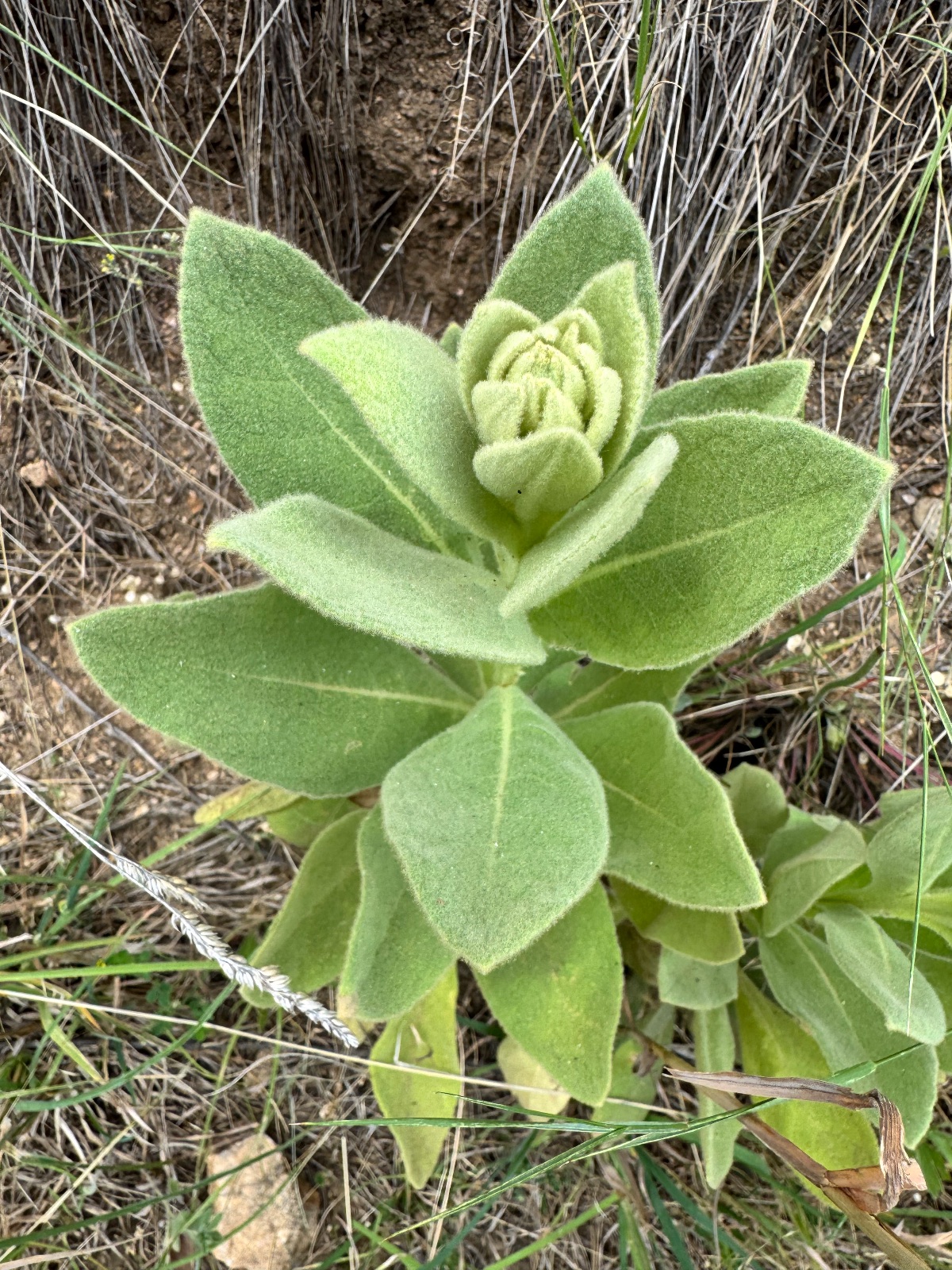
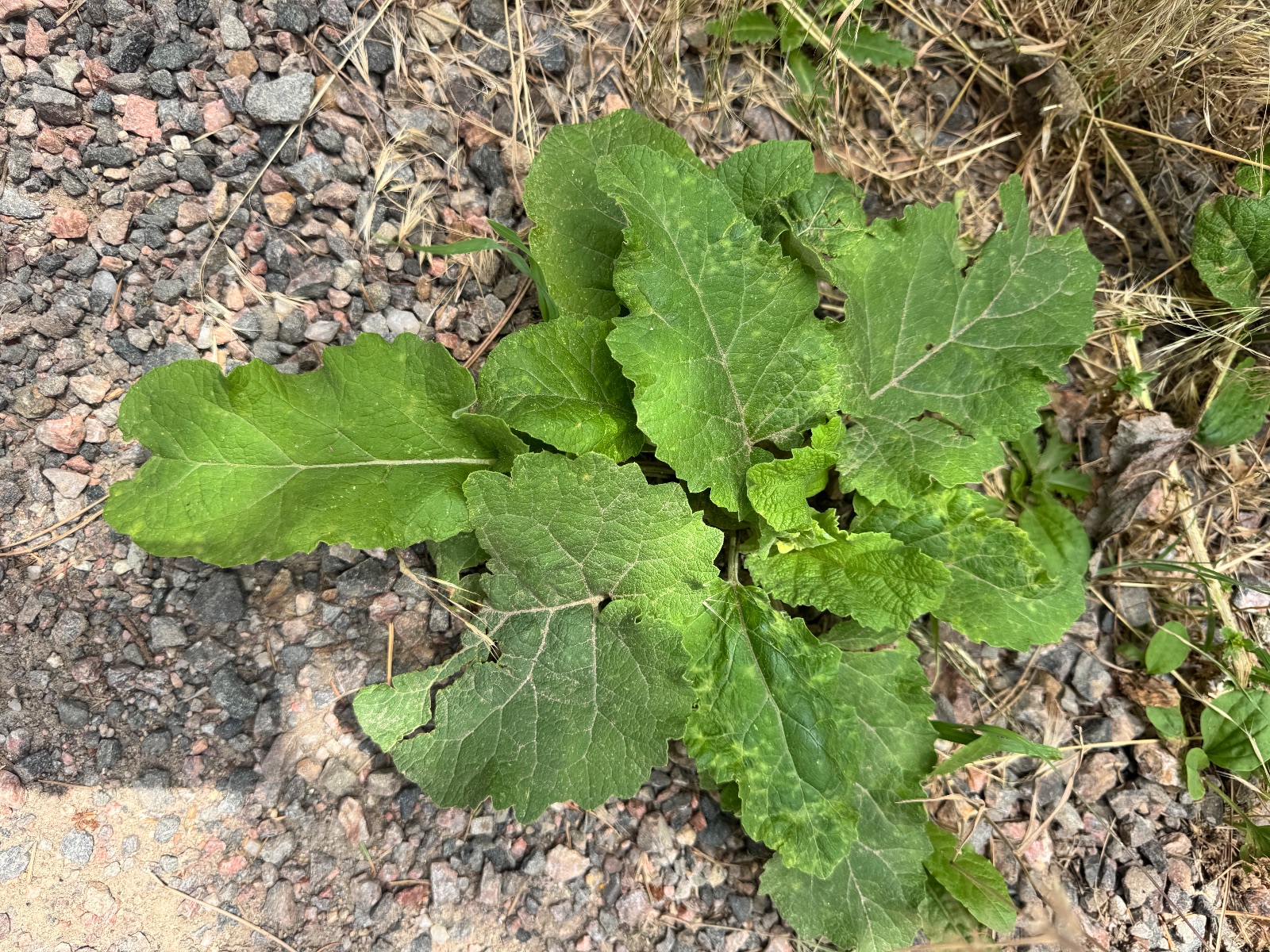
Common mullein (Verbascum thapsus), first-year rosetteCommon mullein (Verbascum thapsus), first-year rosette
🌿 plant · biennial wildflower

Common mullein (Verbascum thapsus), first-year rosette

Both of these are the same plant: common mullein in its first year, when it's all leaves and no stalk yet. That felted, silvery texture is a mat of fine hairs, a trick dry-slope plants use to cut wind, reflect sun, and lose less water, and it makes the leaves less appetizing to nibble too. It's a European import, not native, but it's completely at home on disturbed, sunny foothills ground like this. Next summer this same rosette will send up a tall spike of little yellow flowers, so mark the spot and come back. People have used the dried leaves and stalks for cordage and tinder for centuries, so it's a weed with a resume.
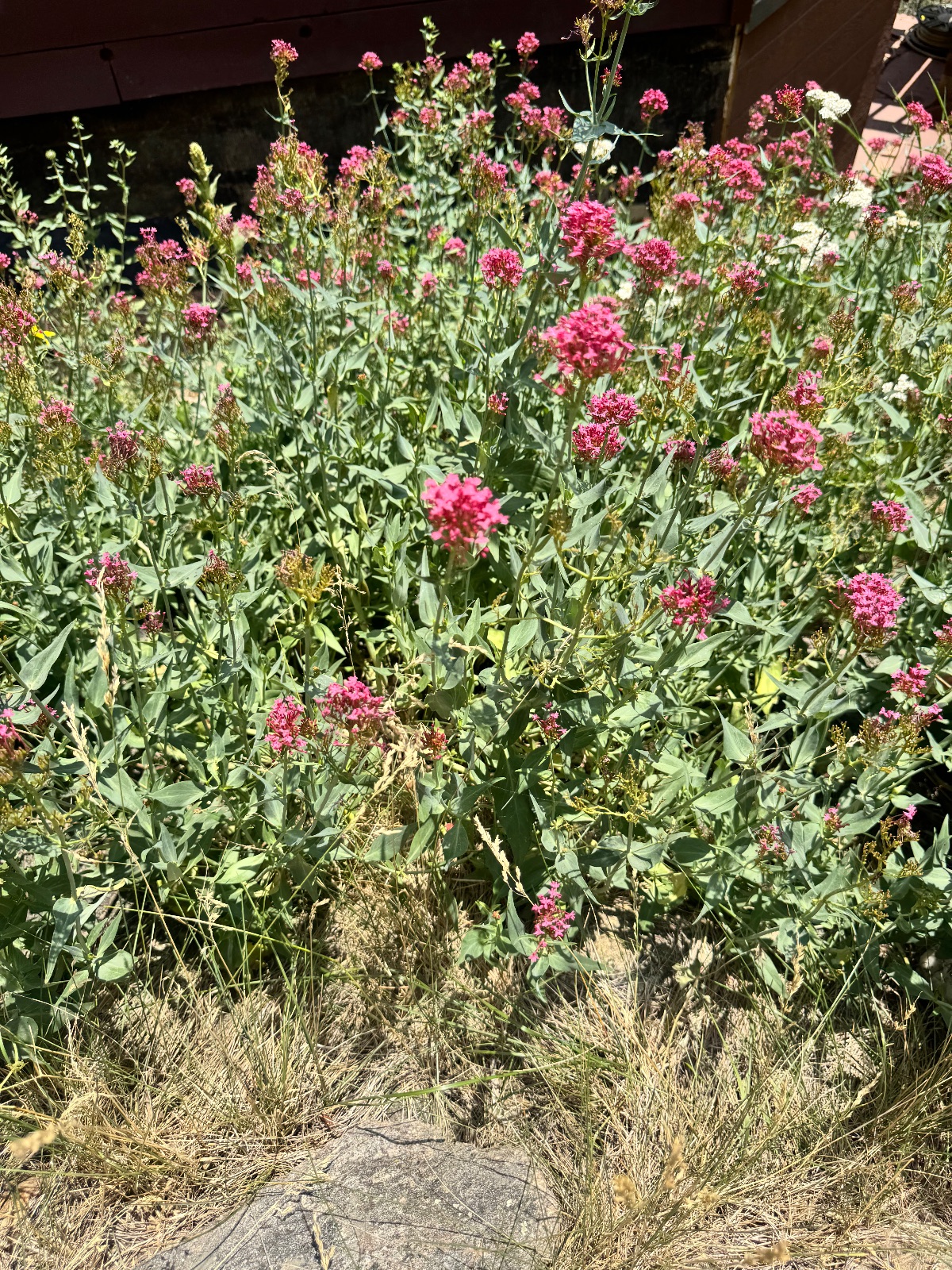
Red valerian (Centranthus ruber)
🌿 plant · garden escapee wildflower

Red valerian (Centranthus ruber)

This one's a garden plant gone rogue, not a native, but you see it all over Boulder foothills neighborhoods where it's jumped the fence line into gravelly disturbed ground. It's a Mediterranean import, tough as nails, blooming hot pink through the dry summer when a lot of natives have already called it quits. The waxy blue-green leaves help it hold water, which is exactly the trick you need on a south-facing slope in July. Bees love it, and honestly so do I, it's a scrappy survivor even if it doesn't belong here by birthright.

Prairie sunflower or similar Helianthus/Heliomeris species
🌿 plant · wildflower

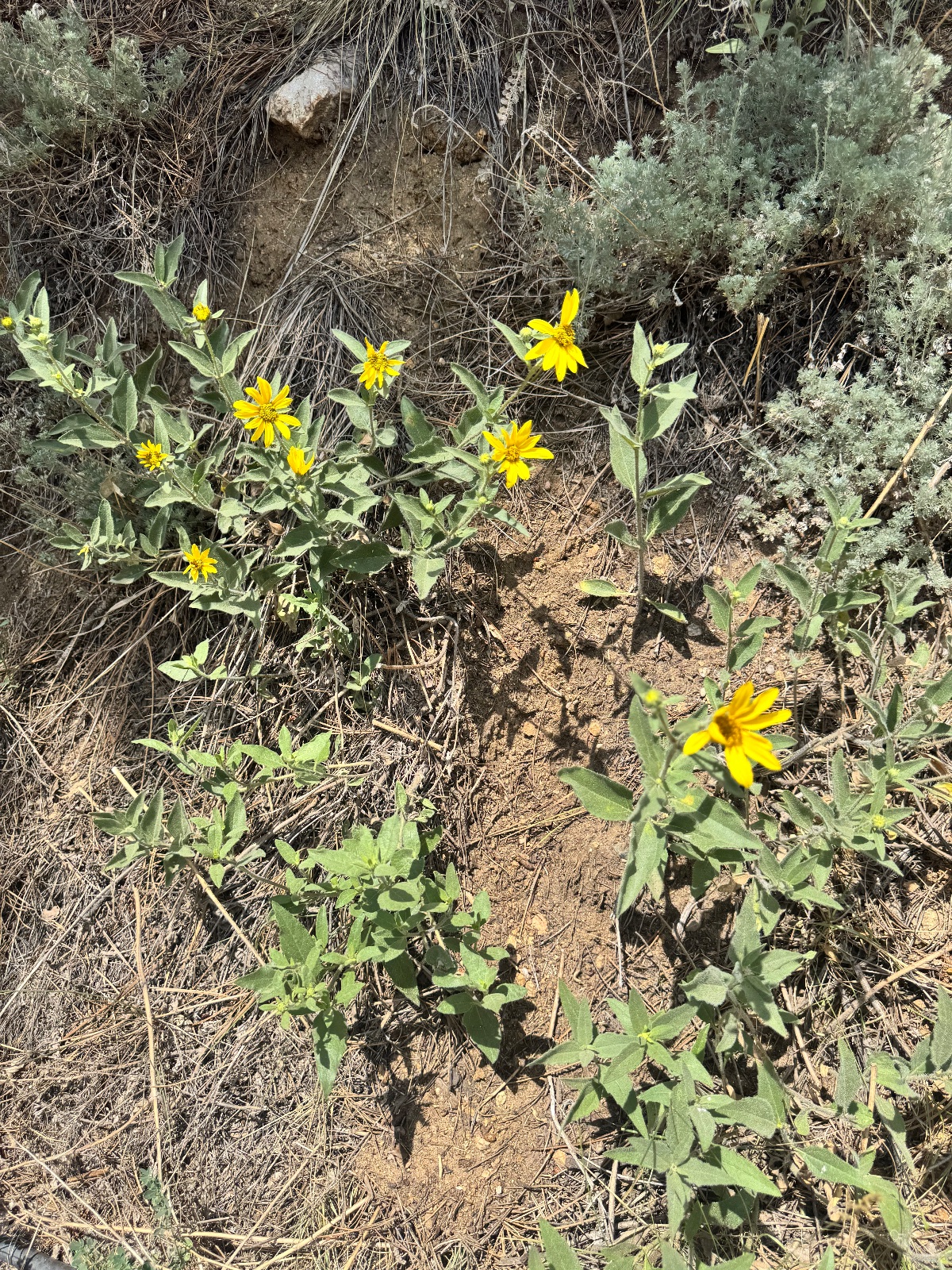
Prairie sunflower or similar Helianthus/Heliomeris species

A cheerful little sunflower relative pushing up through bare, sun-baked dirt next to sagebrush, which tells you this is a dry, open, low-nutrient spot typical of foothills scrubland. The gray-green fuzzy leaves are doing the same water-conservation trick as the sagebrush next to it, this is classic shortgrass-meets-foothills transition habitat. These composites are workhorse late-summer bloomers, feeding native bees and butterflies right when a lot of the spring wildflower show has faded. Nothing fancy, just a tenacious yellow daisy holding its ground in tough soil.

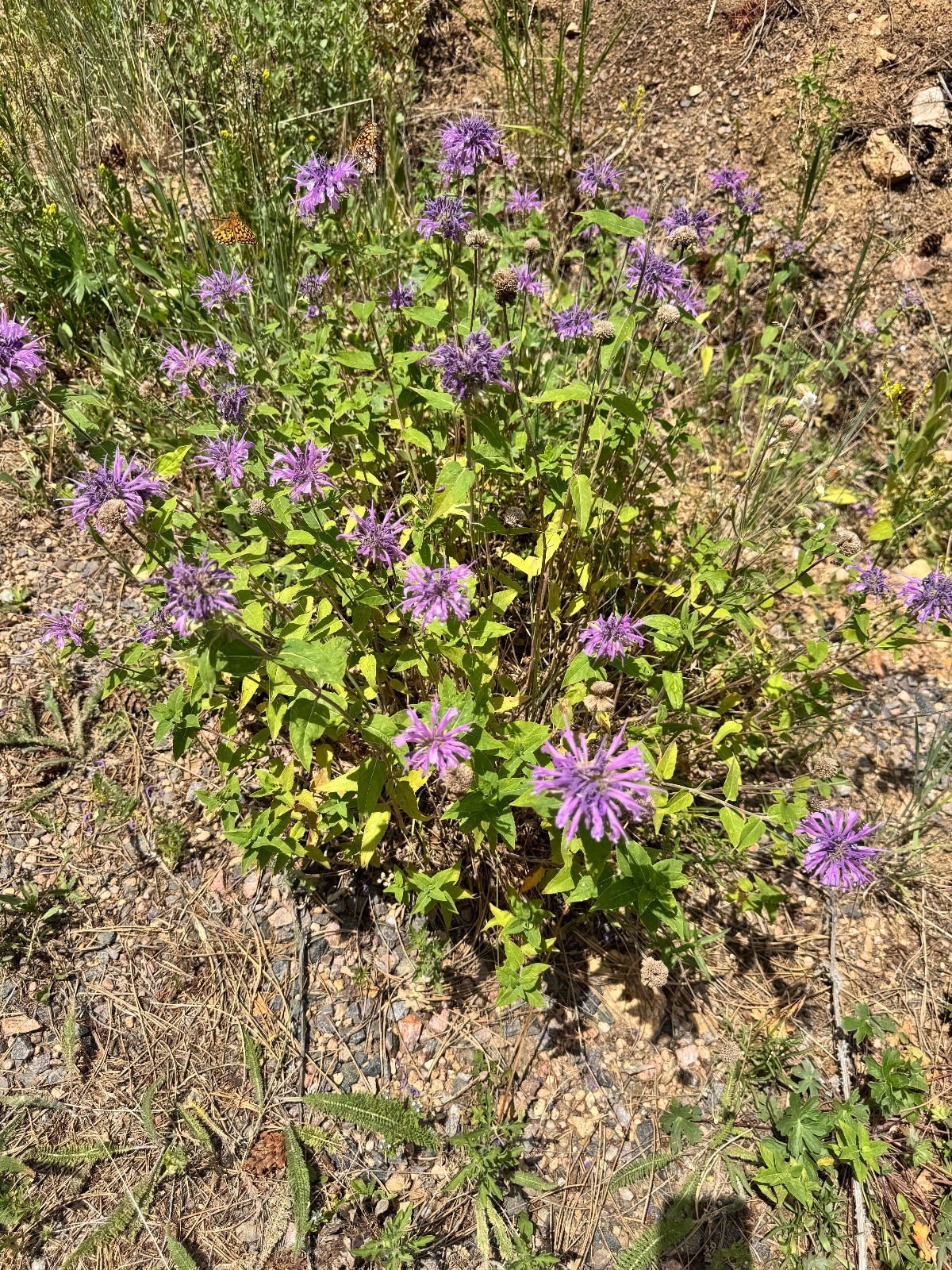
Wild bergamot / bee balm (Monarda fistulosa)
🌿 plant · wildflower

Wild bergamot / bee balm (Monarda fistulosa)

That shaggy lavender-purple flower head is wild bergamot, a mint family plant you can practically identify by nose, crush a leaf and you get that oregano-ish, minty smell. It likes these open, gravelly foothills slopes and forest edges, and it's clearly doing its job today, it's got a fritillary butterfly working it in the photo. This is a great one for Bob's plant-pollinator brain too since bergamot is a magnet for native bees, butterflies, and hummingbirds all season. Square stems if you feel for them, that's your mint family tell every time.

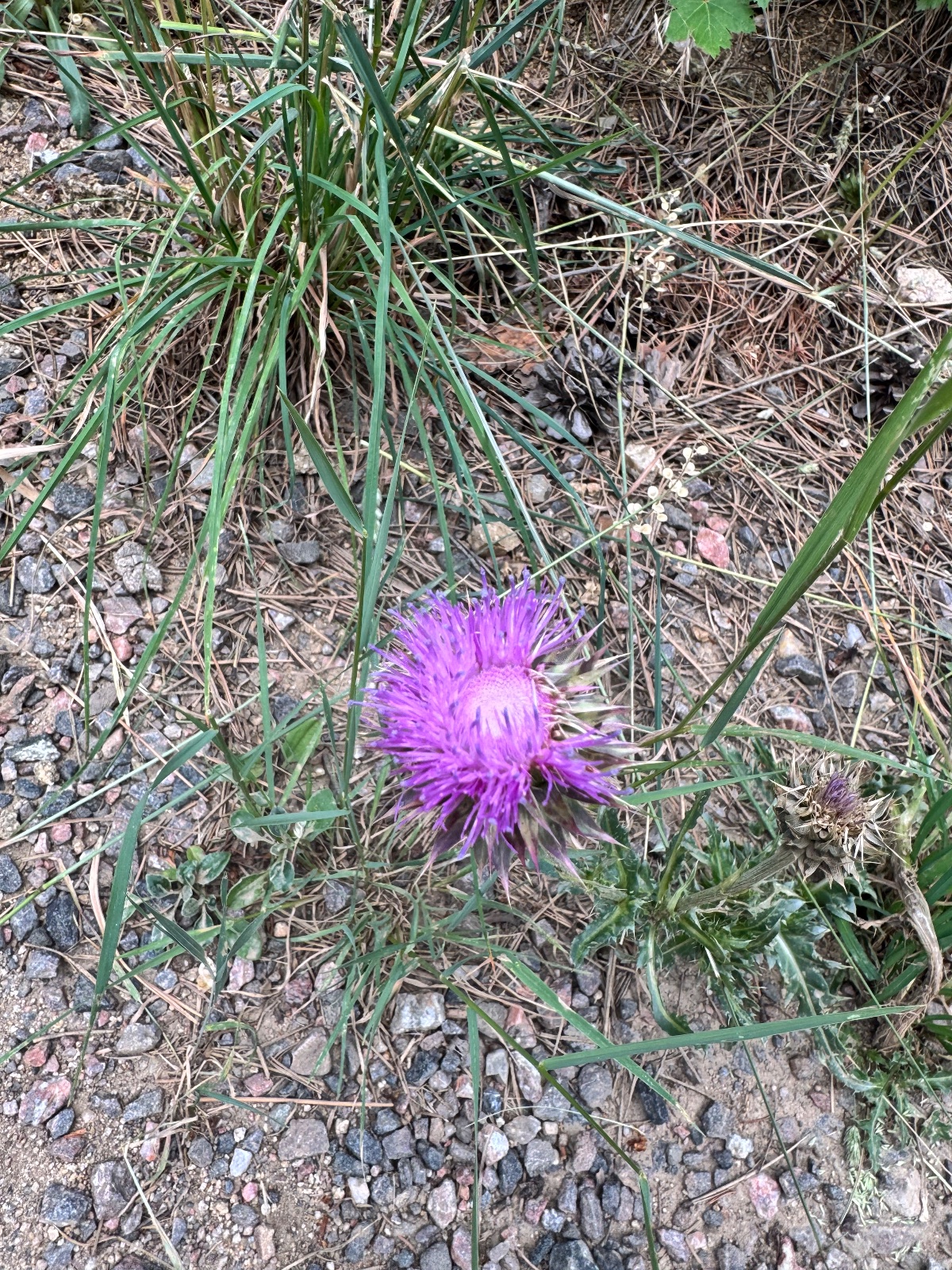
Musk thistle or native purple thistle (Cirsium/Carduus sp.)
🌿 plant · thistle wildflower

Musk thistle or native purple thistle (Cirsium/Carduus sp.)

A spiky purple thistle head doing its best pom-pom impression, growing right out of gravelly trailside soil with bunchgrass crowding in. If the flower head nods and the leaves are extra spiny with a whitish midrib, that leans musk thistle, a Eurasian species that's become a real nuisance on disturbed ground across the West. If it's a native Cirsium instead, it'll be an important nectar source instead of a management headache, worth checking the bracts closer next time. Either way, thistles like this thrive exactly where soil's been disturbed, which fits this gravel-edged trail perfectly.

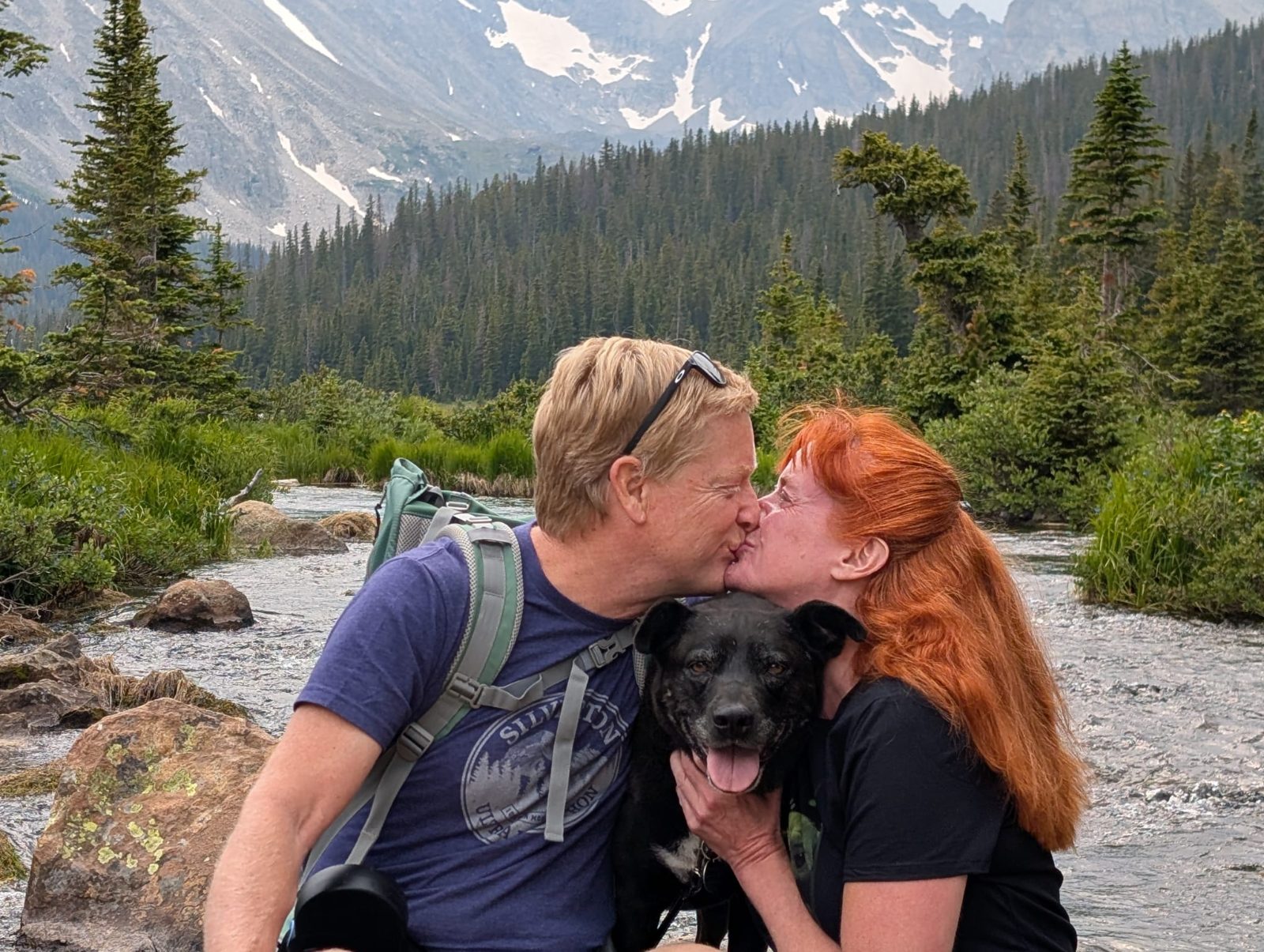
Bob, Annette, and the dog
📍 other · trail moment

Bob, Annette, and the dog

Best find of the day, honestly. You two stealing a kiss with our black dog wedged right between you, tongue out, completely unbothered by the fact that he is the real star of this photo. Snowmelt stream at our backs, granite peaks still patched with snow even this deep into summer, and somehow the dog still manages to steal the whole frame. Worth the climb just for this one.