Bone Voyage A Home for Life
Draft article for review. Enter hub password to continue.
That's not right. Try again.
What Happens to Your Dog When You Die (And the Plan Most People Never Make)
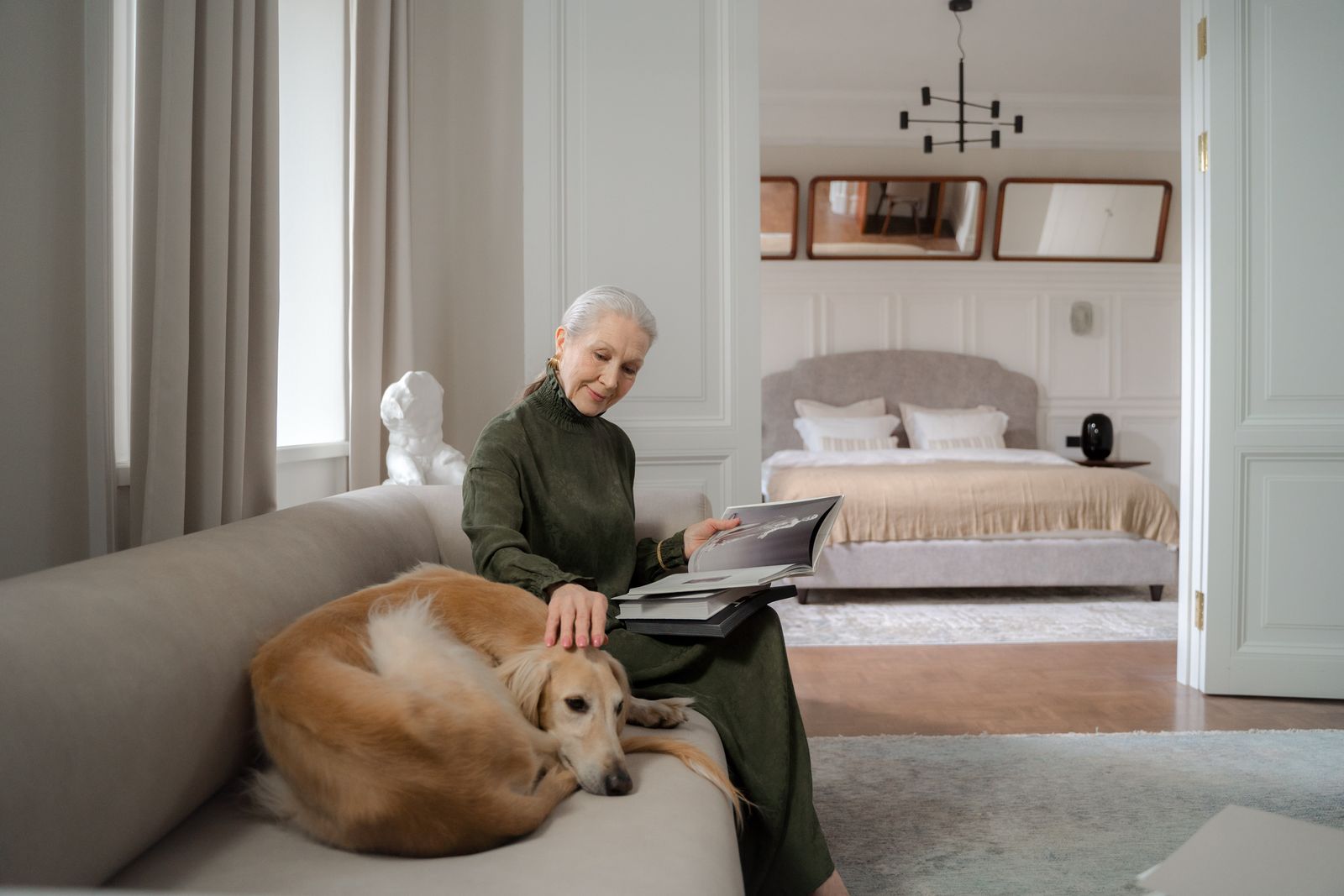
Somewhere out there's a person who could promise to love your dog after you're gone.
You haven't met them yet. But imagine the relief if you had. Imagine your dog already knowing their voice, their smell, the sound of their car in the driveway.
That promise, made in advance, by a real and vetted human, is the plan most people never make.
Most of us plan for nearly everything. The will. The beneficiaries. Who gets the house. But the family member asleep at your feet right now is usually left to chance.
And that family member can be any age. A senior dog deserves this promise, of course. So does a young dog with years ahead of him, or a middle-aged dog who could easily outlive the person who loves him.
So yes, this starts with the hard question: what happens to your dog when you die, or simply can no longer care for him?
Stay with me, because that question is only the doorway. On the other side of it is something hopeful and surprisingly simple. By the end of this you'll know exactly how to make sure a person who already loves your dog is waiting, long before anyone needs them.
🐾 The promise at the heart of all this
Here's the whole idea in one sentence.
Not money set aside. Not a name on a form. A real person, vetted and willing, who said yes in advance and meant it.
And here's the part that makes it work: the promise is a relationship, made while you're still here.
The backup adopter meets your dog. They visit. They learn his routine, the squeaky toy he guards, the spot on the couch that's his. Your dog learns them right back.
So if the day ever comes that you can't care for him, there's no stranger at the door. There's no shelter kennel, no grief stacked on top of grief. There's a familiar person stepping into a place that was always being held for him.
That's the difference between leaving a note and leaving a promise. One hopes someone will step up. The other already has.
🐾 Why the promise matters so much
We love our dogs like family. We just don't plan for them like family.
A will can leave your dog money. It can't leave your dog a person who will actually show up, leash in hand, knowing his name. That gap is where the heartbreak lives.
When an older adult dies or moves into care, the dog often becomes an afterthought in a stressful week. Some families try, and it doesn't fit their life, and the dog is surrendered anyway.
This isn't rare. In a long-running study of dogs given up to a Danish shelter, the single most common reason owners surrendered their dog was the owner's own health, including being sick or elderly, which accounted for 29 percent of relinquishments (a 2020 open-access shelter study). In other words, the most frequent reason a dog loses its home isn't the dog. It's what happens to the person who loves it.
That can happen to a dog of any age. A two-year-old can outlive an older owner. So can a seven-year-old who still has plenty of ordinary afternoons left. The promise is for the specific dog in front of you, not only for dogs who are already old.
And the senior dogs are the ones who wait the longest in a shelter and leave it the least. A ten-year-old dog is competing with puppies for attention, and most people walk right past him. According to the ASPCA, senior dogs are adopted at a rate of about 25 percent, compared with roughly 60 percent for younger dogs and puppies. Peer-reviewed shelter research backs up the pattern: older dogs have a consistently lower chance of being adopted than younger ones (a 2020 peer-reviewed shelter study).
Let me be very clear about one thing. If you have ever had to surrender a dog, this isn't about you. Health fails. Money runs out. Sometimes letting go is the most loving choice a person can make, and no one should be shamed for it.
The promise is about the dogs we could catch before they ever fall. That's a different problem. And it has a beautiful solution.
🐾 Why I can make this promise real
I should tell you why I believe a promise like this can actually hold.
In 1995, I started adoption.com, back when the internet was barely a thing, to connect children who needed families with families who needed children.
Then I went further than a website. I ran three orphanages, in Ethiopia, in Kenya, and in Haiti. And I didn't just place children. I adopted seven of them myself.
So I have spent my whole adult life inside one stubborn question: how do you make sure the most vulnerable have a permanent place to belong before the crisis hits, not after?
That work has a name. Permanency planning. You never wait for a child to land in an emergency and then scramble. You find the people first. You match a specific child to a specific family, and you do the slow, careful work of making sure it'll hold.
I did that for thirty years, at human scale, in some of the hardest places on earth.
And it hit me that the exact gap I spent my life closing for children is wide open for dogs, especially the senior dogs people walk past. Nobody does the matching part. Nobody finds the willing, vetted human in advance and lets the relationship become real.
So that's what we're building. The promise isn't a slogan. It's the work I already know how to do, pointed at the dogs who need it now, whatever age they happen to be.
Image placeholder: Simple warm diagram titled "What Makes the Promise Different" with three soft cards. Card 1 "Pet Trust" = names a caregiver, small X "can't supply a willing one." Card 2 "Sanctuary or Rescue" = "a safety net, last resort, reactive." Card 3 "Backup Adopter" = checkmark "a real person, promised in advance, already a relationship."
🐾 Why a promise, when other tools exist
People who think ahead usually reach for one of three tools. Each is good. None of them makes the promise.
A pet trust. It sets aside money and names a caregiver. Genuinely useful. But it can name a caregiver. It can't supply one who's willing, able, and still in the picture years from now. The ASPCA's own pet trust guidance makes this plain: a trust lets you name a caregiver, but the person you name has to actually be willing and able when the time comes, which is exactly why estate-planning experts urge you to name a backup in case your first choice can't serve. A trust can fund the care. It can't manufacture the person.
A sanctuary. Loving sanctuaries take in animals with nowhere else to go. They're a precious safety net. But a sanctuary is a last resort, not a home, and it kicks in only after everything else has already fallen apart.
Rehoming after the fact. This is what happens in most families. Someone scrambles to find a taker in the worst week of their life. Rushed, reactive, and uncertain for a dog of any age. And if the dog is senior, he is often the hardest to place.
See the pattern? Every existing tool activates after the crisis. The promise is the only one that exists before it, as a living relationship a dog can feel.
🐾 It's not too late to adopt, and the plan is what makes it safe
I don't want this promise to make older adults step back from adoption. I want it to help them step toward it with peace.
Because the fear is simple and tender: what if I adopt a dog and then I can't be there for him all the way to the end?
That fear makes sense. But it doesn't have to make the decision for you. A backup adopter is the missing piece. When a real, vetted person has promised in advance to become your dog's next home if needed, adoption becomes both loving and responsible.
So if you're over 50, or older than that, and you want a dog beside you, it's not too late. A puppy may not be the right match for every season of life, but a young dog, a middle-aged dog, or a silver-faced senior can each be a gift. The point isn't the dog's age. The point is the plan.
You get to enjoy the walks, the meals, the quiet company, the small routines that make a house feel alive. And your dog gets more than today. He gets a person waiting in the wings, already known, already willing, already part of the promise.
That's what makes adoption feel possible again.
🐾 How to start the promise this week
You don't have to wait for the movement to be fully live to begin protecting your dog. Here's a simple framework you can start tonight.
1. Name a real person. Not "my kids will figure it out." An actual name: the first person who would genuinely want your dog and could realistically take him.
2. Ask them out loud. Assuming is how dogs end up in shelters. Have the real conversation: "If something happened to me, would you take him? Yes or no?"
3. Get an actual yes. A promise is only a promise when it's spoken. A maybe isn't a plan.
4. Name a backup to your backup. First choices fall through. A second name isn't pessimism. It's how you make the promise sturdy.
5. Make sure your dog has met them. A familiar face on a frightening day is the entire point. Write it all down where it'll be found: the dog's name, vet, routine, medications, and the people who said yes.
That's it. Mostly free, and you can start the first three tonight. The promise isn't complicated. It's just usually skipped.
Image placeholder: A printable-style card titled "My Dog's Promise Plan" with five short paw-bulleted lines, designed to look downloadable
🐾 What I actually believe
I have placed children with families on three continents, and I have learned a few things the hard way.
Fear doesn't save anyone. If all this piece did was scare you about dying, I'd have failed. We aren't here to frighten you. We're here to hand you a calm, doable promise that lets you stop worrying.
And the gap is almost never love. People love their dogs fiercely. The gap is that nobody ever introduced them to the person who would catch the dog if they fell.
That's the whole mission. Make the promise ordinary. Make the match happen on purpose. Make sure no dog ever goes to a shelter because the human who loved him ran out of time.
I spent thirty years making promises like this for the most vulnerable children I could reach. I'm not done. I'm just widening the circle.
🐾 Make the promise, or be matched with one
If you have a dog, do the five steps above this week. That alone changes everything for him.
If you've been holding back from adopting because you were afraid your dog might outlive you, make the plan first. Then let yourself consider the dog who fits your life now. Responsible love doesn't mean saying no to companionship. It means making sure the promise is bigger than one person.
And if the bigger idea moves you, join us. There are two ways in.
- Make the promise. Become a backup adopter for a dog who needs a second person already waiting.
- Be matched with one. Hold a place for your own dog so a vetted, willing person can be paired with him in advance.
The Bone Voyage backup-adopter list is open now. We collect only your email and your region, so we can begin matching by area as the movement grows. No cost. No obligation. No donation ask, ever.
Hold a place for your dog, or become someone's backup adopter
Join the free backup-adopter list
Email and region only. One field tells us which way you lean: make the promise, or be matched with one. That's the entire sign-up.
Send this to someone over 50 who loves their dog, or someone who has wondered whether it's too late to adopt one, and has never once thought about who comes next.
Because the best promise you can make your dog is the one a real person already kept.
🐾 Quick answers
What happens to your dog when you die?
Without a plan, a dog of any age whose owner dies or moves into care may be surrendered to a shelter, and senior dogs wait there the longest. The fix is a backup adopter: a real, vetted person who agreed in advance to take your dog, has already met him, and steps in so he never faces a kennel.
What is a backup adopter?
Someone who has already promised to love your dog, named long before anyone needs them. They're vetted and willing, they meet your dog and learn his routine while you're still here, and they agree to become his home if you no longer can.
Is a pet trust enough on its own?
A pet trust can set aside money and name a caregiver, but it can't supply a person who's willing and able when the time comes. That's why estate-planning experts urge naming a backup. A trust funds the care. A backup adopter is the person who actually shows up.
How do I start a backup plan this week?
Name a real person, ask them out loud, get an actual yes, name a backup to that backup, and make sure your dog has met them. Write down the dog's name, vet, routine, medications, and the people who said yes.
Am I too old to adopt a dog?
No. If you want a dog in your life, it's not too late to adopt one. A young, middle-aged, or senior dog can all be a gift, and making a backup-adopter plan is what makes that choice safe and responsible.
Sources
- Owner-Related Reasons Matter more than Behavioural Problems: A Study of Why Owners Relinquished Dogs and Cats to a Danish Animal Shelter from 1996 to 2017. Animals, 10(6), 1064. https://doi.org/10.3390/ani10061064
- Phenotypic Characteristics Associated with Shelter Dog Adoption in the United States. Animals, 10(11), 1959. https://doi.org/10.3390/ani10111959
- ASPCA. Pet Trust Laws. https://www.aspca.org/pet-care/pet-planning/pet-trust-laws
- Senior-dog adoption strategy report. An Evaluation of Strategies to Increase the Adoption of Senior Dogs. https://www.maddiesfund.org/assets/maddies-idea-labs/maddies-fund-final-report-grey-muzzle-6-10-20.pdf
🐾 Annette Thompson
Bone Voyage draft · Private · ← Hub